
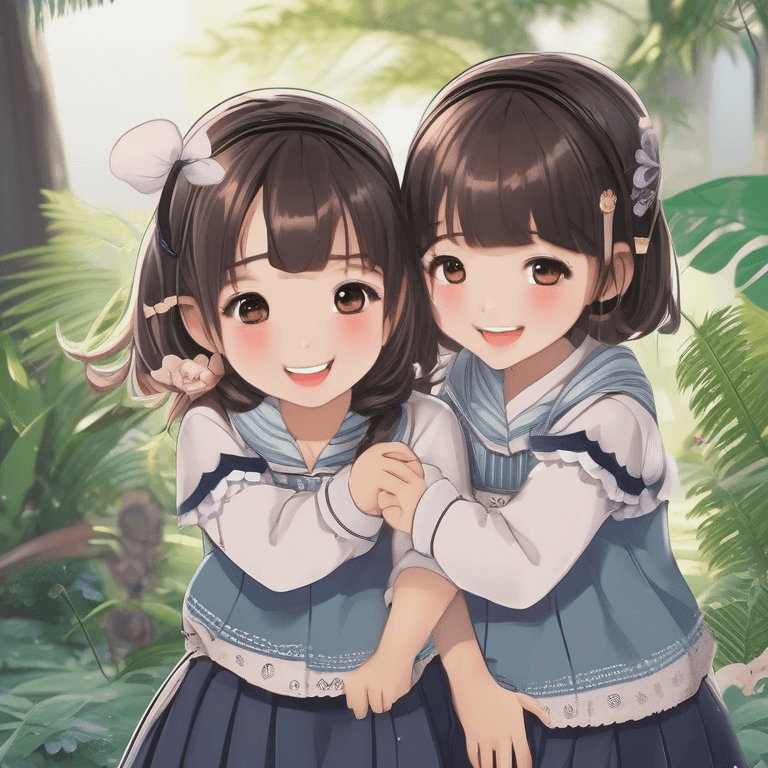
Free AI Art Generator with No Sign Up Required — Create Instantly
Why No Sign Up Matters for AI Art Creators
The single biggest barrier between a creator and their first AI-generated image is not technology, cost, or skill — it is friction. Account creation forms, email verification steps, credit card requirements, and waiting lists have historically blocked millions of people from experiencing what AI art generation can do. The demand for a free AI art generator with no sign up required has exploded precisely because creators at every skill level want to experience the technology immediately, without commitment, and without handing over personal information before they know whether a tool is worth their time. This is not laziness or unwillingness to engage — it is a completely rational response to a landscape littered with tools that promise great results but deliver disappointing outputs after making you jump through multiple setup hoops. The no sign up requirement has become a genuine differentiator in the AI art space, separating tools that are truly confident in their output quality from those that use account creation as a way to capture user data before revealing a mediocre product. When a platform offers immediate, barrier-free access to its AI generation capabilities, it is making a statement about the quality of its output — essentially saying that the results speak for themselves and no psychological lock-in is needed before the first generation. In this guide we will explore what to look for in a free AI art generator with no sign up, what capabilities you can realistically expect from free-tier tools, how to maximize your results without any account or subscription, and why the best free AI art generators are increasingly competitive with paid alternatives for many common use cases. Whether you are a game developer testing AI tools for character creation, a marketer experimenting with brand visuals, a writer looking for book cover inspiration, or simply a curious creator who wants to see what AI art can do, the no sign up approach gives you the fastest possible path from idea to image.
What to Expect from a Free AI Art Generator
Understanding what free AI art generators actually deliver — and what their limitations are — sets realistic expectations that make the experience more productive and less frustrating. The best free AI art generators available today are built on the same foundational technology as paid alternatives: diffusion models that have been trained on enormous datasets of images and learned to generate new images based on text descriptions. The core generation capability of these tools is genuinely impressive and capable of producing professional-quality outputs across a wide range of styles including realistic portraiture, anime and manga characters, fantasy illustration, concept art, and abstract imagery. The primary differences between free and paid tiers in AI art generation are not about the fundamental quality of the underlying model — they are about access, volume, and advanced features. Free tiers typically limit the number of images you can generate per day, restrict access to certain premium style options or higher-resolution outputs, may apply watermarks to downloaded images, and sometimes limit commercial usage rights. These constraints are entirely reasonable for a first experience with the technology and for casual personal use, but they can become limiting for professional workflows that require high volume, specific style options, and clear commercial licensing. The most important thing to evaluate in any free AI art generator is the quality of its base output — how accurately does it interpret your text descriptions, how consistent are its results across multiple generations of similar prompts, and how does the visual quality compare to your project requirements? A free tool that produces excellent outputs with the limitations of its free tier is far more valuable than a paid tool with mediocre output quality. For many users, the free tier of a high-quality platform provides everything they need for their specific use case, making the upgrade to paid plans entirely optional. Resolution is another key factor to evaluate. Free tiers sometimes generate at lower resolutions that are perfectly adequate for web and social media use but insufficient for print or large-format display. Understanding the resolution capabilities of your chosen tool helps you determine whether the free tier meets your requirements or whether specific projects will require a paid tier for higher-resolution outputs.
The Best Use Cases for Free AI Art Generation
Free AI art generators without sign up are not equally well-suited to every creative application. Understanding which use cases are best served by free-tier tools helps you identify where to deploy them most effectively and where paid alternatives might better serve your needs. Character concept development is one of the strongest use cases for free AI art generators. When you are in the early stages of designing characters for a game, story, or brand, you need to explore a wide range of visual possibilities quickly and inexpensively. Free generation tools allow you to iterate through dozens of character concepts in a single session, testing different physical types, clothing styles, color palettes, and artistic treatments to find the direction that best serves your creative vision. This exploratory phase does not require high-resolution outputs or commercial licensing — it requires speed and variety, both of which free tools provide effectively. Social media content creation is another strong fit for free AI art generators. The resolution requirements for social media platforms are well within the capabilities of most free-tier tools, and the volume of content that social media demands — multiple posts per week across multiple platforms — makes the daily generation limits of free tools a manageable constraint when planned appropriately. Creators who build their content calendars around their free generation allowances can maintain consistent visual output without any subscription cost. Inspiration and mood boarding represent perhaps the purest use case for free AI art generation with no sign up. When you need to quickly visualize a creative direction, explore color palette options, or generate reference material for a traditional art project, the barriers to entry of paid tools are genuinely counterproductive. The ability to open a browser, describe an image, and see it generated in seconds — with no account, no payment, and no commitment — is exactly what inspiration-driven creative work requires. Educational and experimental use is naturally suited to free AI art generators. Students learning about AI art, educators demonstrating the technology to their classes, researchers exploring the capabilities of diffusion models, and curious creators who want to understand how AI image generation works all benefit from immediate, barrier-free access that free tools provide. The learning process requires the freedom to experiment without financial commitment, and no sign up tools maximize that freedom.
How to Get the Best Results Without an Account
Maximizing your results from a free AI art generator with no sign up requires understanding how to communicate your creative vision effectively within the constraints of the free tier. The single most impactful thing you can do to improve your results is to invest time in prompt quality. A well-constructed, specific, detailed prompt will consistently outperform a vague or generic prompt regardless of what generation tool you are using, and this advantage is amplified in free-tier environments where you have fewer generations available and want to make each one count. Start your prompt with the most important element — the subject — and describe it with as much specific detail as you can articulate. Instead of "an anime character," write "a teenage anime girl with long silver hair, bright violet eyes, wearing a white school uniform with dark blue trim, standing in a confident pose with a slight smile." The additional specificity dramatically increases the probability that your first generation will be close to what you imagined, reducing the need for multiple refinement iterations. Art style specifications are particularly powerful in free tier environments because they give the model clear guidance that reduces the variance in its outputs. Including specific style references — "anime style," "detailed fantasy illustration," "painterly concept art," "flat vector illustration," "gritty noir comic style" — anchors the model's interpretation and produces more consistent, predictable results than relying on the model to infer your stylistic intentions from subject description alone. Quality modifier terms are the final layer of prompt optimization that can significantly improve free-tier outputs. Terms like "highly detailed," "professional quality," "sharp focus," "vivid colors," "cinematic lighting," and "award-winning illustration" have been shown to consistently improve the quality of AI-generated images across most major platforms. These modifiers work because the training data for diffusion models includes image metadata and descriptive text that associates these quality terms with high-quality images, teaching the model to apply more careful, detailed rendering when these terms appear in prompts. Negative prompts — descriptions of what you do not want in your image — are equally important for controlling output quality. Standard negative prompt terms like "blurry, low quality, low resolution, watermark, text, duplicate, distorted, bad anatomy, worst quality" help prevent the common failure modes of AI generation and consistently improve output quality across all generation tools.
Free AI Art for Commercial Use — What You Need to Know
One of the most important questions for creators considering free AI art generators is whether the images they generate can be used commercially — in client projects, products, marketing materials, and monetized content. The answer varies significantly between platforms and is one of the most important factors to evaluate before investing creative time in any AI art tool. Some free AI art generators apply strict non-commercial restrictions to their free tier outputs, meaning that images generated without a paid subscription cannot legally be used in commercial applications. Others offer full commercial licensing even on free plans, which is an enormous value proposition for creators who want to explore commercial applications without financial commitment. Charify is specifically designed with commercial use in mind, offering full commercial licensing on generated images across all plan tiers. This commitment to commercial accessibility reflects an understanding that many creators — especially independent game developers, self-published authors, small business owners, and independent marketers — have legitimate commercial needs but limited budgets, and restricting commercial use to paid tiers creates unnecessary barriers for exactly the users who would benefit most from AI-powered character and image creation. When evaluating any free AI art generator for commercial use, look carefully at the platform's terms of service rather than relying on marketing language. Terms of service documents specify exactly what rights you have over generated images, under what conditions commercial use is permitted, whether attribution is required, and what restrictions apply to specific use cases like resale, licensing to third parties, or use in products. Understanding these terms before you invest significant creative time in a platform prevents unpleasant surprises when you try to deploy your generated images in commercial contexts. The commercial licensing landscape for AI-generated art continues to evolve as the legal framework around AI intellectual property develops. Platforms that offer clear, permissive commercial licensing are making a deliberate choice to support their users' creative and commercial ambitions, while those with restrictive licensing are often prioritizing their own revenue protection over user empowerment. Choosing platforms with creator-friendly licensing policies is both practically important and a statement of support for the development of accessible, empowering AI art tools.
Comparing Free AI Art Generators — What Sets the Best Apart
The market for free AI art generators has grown enormously, and the quality gap between the best and worst options has never been wider. Understanding what separates excellent free tools from mediocre ones helps you quickly identify which platforms are worth your time and which are not. Output quality is the most fundamental differentiator, and it is immediately apparent from your first generation. High-quality free AI art generators produce images with coherent composition, accurate anatomy, clean edges, realistic or stylistically consistent texturing, and faithful interpretation of prompt descriptions. Low-quality generators produce images with distorted anatomy, muddy textures, incoherent composition, and unreliable prompt interpretation. The difference is obvious within seconds of first use. Style range and consistency is the second key differentiator. The best free AI art generators support a wide range of artistic styles and produce consistent results within each style — meaning that generating two images with similar prompts in the same style produces outputs that feel visually coherent and related. Generators with limited style range or inconsistent style application produce outputs that feel random and unreliable, making them unsuitable for any project that requires visual consistency across multiple images. Generation speed matters more than many creators initially realize. Waiting thirty seconds to two minutes for each image generation creates a frustrating workflow that discourages the iterative experimentation that produces the best results. The best free AI art generators produce results in five to fifteen seconds, enabling rapid iteration that is fundamental to effective AI art practice. User interface quality has a significant impact on the practical value of free AI art generators. Tools with clear, intuitive interfaces that surface the most important controls — style selection, aspect ratio, quality settings, and prompt input — without overwhelming users with technical parameters enable better results than technically capable tools with confusing or cluttered interfaces. The best tools make it easy to focus on creative decisions rather than technical configuration. Finally, the availability of image-to-image capability in the free tier is a significant differentiator between basic and advanced free tools. Image-to-image generation — the ability to upload a reference image and transform it into a new style while preserving composition and structure — dramatically expands the creative possibilities of a free tool and is particularly valuable for character consistency workflows.
Charify's Approach to Free AI Art Generation
Charify was built around a specific philosophy regarding free access to AI art generation: that the technology is most valuable when it is most accessible, and that artificial barriers to access — account requirements, credit card gates, and restrictive free tiers — reduce the value of the tool for everyone. This philosophy is reflected in Charify's free tier design, which is built to give new users a genuine experience of the platform's capabilities rather than a deliberately limited preview designed to frustrate users into upgrading. The free tier on Charify provides access to the platform's core character generation capabilities, including multiple art styles spanning anime, manga, realistic, Ghibli-inspired, and Pixar-influenced aesthetics. This style range reflects the actual demands of Charify's primary user base — game developers, marketers, writers, and digital creators who need characters in specific visual styles for specific commercial applications. By making this style range accessible without account creation, Charify allows users to immediately assess whether the platform's output quality and style range meet their project requirements before making any commitment. The commercial licensing included with all Charify generations — including those made in the free tier — reflects the platform's commitment to being genuinely useful rather than just technically impressive. A stunning AI-generated character that cannot be used commercially is of limited practical value to most of Charify's target users, and the platform's all-tier commercial licensing ensures that free users can immediately put their generated characters to work in real projects. The image-to-image capability in Charify's workflow enables free users to upload reference images and transform them into different artistic styles — a capability that dramatically expands the creative applications of the free tier and gives users a taste of the advanced workflow capabilities that make the platform valuable for professional production environments. As Charify continues to develop, the commitment to maintaining genuinely useful free access reflects the platform's understanding that the best way to demonstrate value is to let the work speak for itself — and the best way to let the work speak for itself is to remove every barrier between the creator and their first generated image.
Getting Started with Free AI Art Generation Today
The path from your current moment to your first AI-generated image is shorter than you might think, and the no sign up approach makes it shorter still. The practical steps to getting started with free AI art generation are straightforward: choose a platform that offers genuine free access without account requirements, spend a few minutes reading about effective prompt construction, and start generating. The learning curve for basic AI art generation is remarkably shallow — most creators produce their first satisfying result within their first ten generations, often much sooner. The deeper learning curve of advanced AI art practice — prompt engineering mastery, image-to-image workflows, style management, LoRA application — unfolds naturally as you develop experience and understanding through regular practice. But none of that advanced skill is required to start producing useful, impressive images today. Begin with specific, detailed prompts that describe exactly what you want to see. Include style specifications that match your intended aesthetic. Add quality modifier terms. Generate your first batch of images and evaluate what worked and what can be improved. Adjust your prompt based on that evaluation and generate again. This simple iterative practice is the foundation of AI art skill development, and it requires nothing more than access to a free generation tool and a willingness to experiment. The creative possibilities that open up once you have your first successful generation are genuinely exciting. Characters you have imagined but could not draw come to life. Visual concepts that existed only in your mind become shareable images. Marketing visuals that would have required an illustration budget appear in seconds. The barrier between creative vision and visual reality dissolves in a way that feels, even after hundreds of generations, slightly magical. That experience — the immediate translation of imagination into image — is what free AI art generation with no sign up makes available to every creator, right now, without friction, without commitment, and without cost.
The Future of Free AI Art Generation
The trajectory of free AI art generation points toward increasing capability, decreasing friction, and expanding access. The competitive dynamics of the AI art platform market are pushing every major player to improve the quality and accessibility of their free tiers, as creators have more choices than ever and quickly migrate to platforms that offer the best combination of output quality, feature access, and usage terms. This competition benefits creators directly — the free tier of today's leading AI art platforms would have been considered premium functionality just two years ago, and this trend shows no sign of slowing. The technology underlying free AI art generators continues to advance rapidly. Newer diffusion model architectures produce higher-quality outputs more efficiently, enabling platforms to offer better results at lower computational cost. This efficiency improvement directly enables better free tiers — more generations per day, higher resolution outputs, and more advanced features included at no cost. The integration of AI art generation into the broader creative software ecosystem is accelerating, with generation capabilities appearing in design tools, content management platforms, and creative suite applications. This integration will make AI art generation increasingly accessible to creators who work within existing software environments rather than dedicated AI art platforms. The normalization of AI art generation as a standard creative tool — rather than a novelty or experimental technology — is also driving the expansion of free access. As AI-generated characters, illustrations, and visual assets become routine components of games, marketing campaigns, books, and social media content, the tools that create them are becoming infrastructure rather than luxury — and infrastructure is most valuable when it is most accessible. Free AI art generation with no sign up is not just a feature of forward-thinking platforms — it is the direction the entire industry is moving, driven by the recognition that accessibility and quality together create the conditions for genuine creative empowerment.