
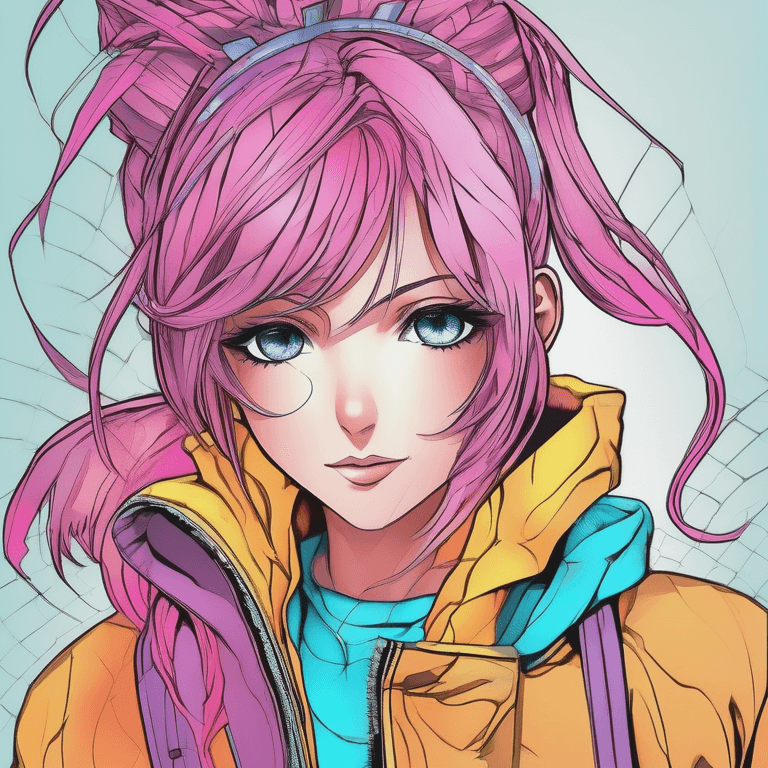
Anime Character Generator from Text — Create Custom Anime Art with AI
The Rise of Text-to-Anime Character Generation
Anime has become one of the most globally influential visual art forms of the modern era, driving a massive and growing demand for anime-style character art across games, streaming content, social media, merchandise, and independent creative projects. For decades, creating authentic anime character art required years of artistic training or expensive commissions from specialized illustrators. The emergence of AI-powered anime character generators from text descriptions has fundamentally transformed this landscape, making professional-quality anime character creation accessible to anyone with a creative vision and the ability to describe it in words. The technology behind text-to-anime character generation is built on the same diffusion model architecture that powers all modern AI image generation, but specialized and fine-tuned to understand and reproduce the specific visual language of anime — the distinctive eye styles, hair physics, clothing conventions, color palette preferences, and compositional approaches that define anime as a recognizable aesthetic tradition. This guide covers everything you need to know about using AI anime character generators from text descriptions: how the technology works, what makes some generators dramatically better than others, how to write prompts that produce the specific anime style you want, what the best use cases are for AI-generated anime characters, and how to integrate AI anime character generation into professional creative workflows.
How AI Generates Anime Characters from Text
Understanding how AI anime character generators work from text descriptions helps you write better prompts, interpret your results more accurately, and troubleshoot when outputs do not match your intentions. The generation process begins when you submit a text description — your prompt — to the AI model. The model processes this text through its learned understanding of the relationships between textual descriptions and visual elements, using those relationships to construct an image that corresponds to your description. For anime character generation specifically, this process draws on the model's learned understanding of anime visual conventions — knowledge built from exposure to enormous quantities of anime artwork during training. The model has learned that certain terms reliably correspond to specific visual elements in anime style: "heterochromia" means two different-colored eyes, "twin tails" describes a specific hairstyle, "ahoge" refers to the characteristic single protruding hair strand, and thousands of other anime-specific visual terms each correspond to precisely understood visual elements. The generation process itself operates through progressive refinement — the model begins with random noise and progressively refines it through multiple steps, guided by your prompt at each step, until it produces a coherent image that matches your description. Most effective anime generation settings fall in the range of 20-30 sampling steps and 7-12 guidance scale for a balance of quality, accuracy, and generation speed.
Writing Effective Prompts for Anime Character Generation
The quality of your text prompt is the single most important factor determining the quality of your AI-generated anime character. Anime character generation from text rewards specific, structured prompting that addresses each visual element of your character in the vocabulary the model understands most effectively. The foundation of an effective anime character prompt is a clear, specific physical description that covers the elements most important to anime character identity: hair (color, length, style), eyes (color, shape, expression), facial structure and expression, body type and proportions, and any distinctive physical features. Hair description in anime prompts benefits from combining color specifications with style terms: "long wavy silver hair with blue highlights," "short spiky orange hair," "twin tails with dark blue ribbons," "flowing golden hair that reaches her waist," "messy black hair with a single red ahoge." Eye description is equally important: "large violet eyes with long lashes," "sharp golden eyes with vertical pupils," "soft brown eyes with a warm expression." Clothing description should be specific about garment type, color, and distinctive details. Quality and style modifiers complete an effective anime character prompt: "anime style, highly detailed, professional quality, sharp lines, vibrant colors, dynamic composition, cinematic lighting."
Anime Sub-Styles and How to Specify Them
Anime is not a single visual style but a family of related styles with distinct aesthetic characteristics, and the best AI anime character generators from text allow you to specify these sub-styles with precision. Shounen anime style is characterized by dynamic energy, bold lines, expressive faces, and high-contrast color work. Shoujo anime style features softer lines, more delicate facial structures, elaborate hair and clothing details, and a color palette that emphasizes pastels and soft tones. Moe anime style emphasizes cute, endearing character traits with large expressive eyes, small features, and designs that maximize adorableness. Seinen anime style features more realistic proportions, darker themes, and more sophisticated visual treatments that target adult audiences. Isekai and fantasy anime style combines anime character design with elaborate fantasy elements — magical weapons, elaborate armor, fantasy clothing, and often magical or supernatural visual effects. Slice-of-life anime style emphasizes natural, relatable character designs with modern clothing, everyday settings, and warm, approachable aesthetics.
Best Use Cases for AI Anime Character Generation
AI anime character generators from text descriptions are not equally well-suited to every creative application. Visual novel and indie game development represents one of the strongest use cases for AI anime character generation. Visual novels and anime-style games require extensive character art — main characters in multiple expressions and outfits, supporting characters, background characters, and sometimes hundreds of unique individuals populating the game world. Creating this volume of character art through traditional commission or in-house illustration is prohibitively expensive for most independent developers. Manga and webtoon creation and planning is another strong use case. YouTube content creation and streaming has driven enormous demand for anime-style avatar and character art. Social media content built around anime aesthetics benefits from AI generation tools that allow creators to produce custom character art that expresses their specific aesthetic vision without requiring illustration skills or commission budgets.
Maintaining Character Consistency Across Multiple Images
One of the most significant challenges in using AI anime character generators from text is maintaining visual consistency when you need to generate the same character in multiple poses, expressions, outfits, or scenes. The primary strategy for maintaining anime character consistency is prompt standardization — developing a detailed, specific character description that you use consistently across all generations of that character. Image-to-image generation is the most powerful tool for maintaining anime character consistency. Once you have generated a base character image that accurately represents your character's design, you can use it as a reference for all subsequent generations. By uploading your best character image and generating from it with image-to-image at appropriate denoising strength, you can maintain the character's fundamental appearance — facial structure, hair design, overall proportions — while changing specific elements like expression, pose, outfit, or background.
AI Anime Characters for Commercial Projects
The commercial applications of AI anime character generation are extensive. Platforms with clear, permissive commercial licensing — like Charify, which includes full commercial rights with all generated images — enable straightforward deployment in commercial products without legal uncertainty. Game development studios, publishing companies, marketing agencies, and merchandise companies are all integrating AI character generation into their asset pipelines to reduce illustration costs and accelerate production timelines.
Integrating AI Anime Character Generation into Your Creative Workflow
The most effective use of AI anime character generators from text is not as a standalone creative activity but as an integrated component of a broader creative workflow. For game developers, AI anime character generation fits most naturally into the asset development phase of the production pipeline, following character concept definition and preceding final art implementation. For manga and webtoon creators, AI anime character generation supports both the planning phase and the production phase for backgrounds, secondary characters, and visual novel-style presentation panels. Platforms like Charify are designed to support these integrated workflow approaches, providing the combination of output quality, style range, commercial licensing, and workflow features — including image-to-image capability — that professional creative applications require.